What to Pack for the Laugavegur Trail (and What NOT To Pack!)
Hey traveler! As a Biochemical Engineer, I love optimizing things—including the perfect travel experience! This post contains affiliate links, which means I may earn a small commission if you book or buy something through my links, at no extra cost to you. I only recommend travel experiences I truly believe will make your adventures even better. Your support helps keep Beauty and the Bucket List running—thank you!
Packing for Iceland is a challenge of itself, with its volatile climate and frigid winds, and when you consider adding multi-day hiking excursions to your itinerary, you might be scratching your head wondering exactly what’s necessary to pack and what can be left behind.
Iceland is a unique country that has its own set of requirements for hikers, including all-season wind-proof tents (necessary for campers rather than hut sleepers) and weather-proof gear. After hiking the Laugavegur Trail and experiencing every single season in the span of four incredible days, I understand what is necessary to pack and what is just extra weight.
This detailed guide covers exactly what to pack for the Laugavegur Trail, Iceland’s incredible 55-kilometer trek through the southern highlands. Most hut-to-hut packing lists repeatedly include the same sets of gear for every trek, a “cookie cutter” packing list that doesn’t always work well for the rugged conditions in Iceland. This Laugavegur packing list includes essential items for the trek so you can pack exactly what you need. It’s helpful NOT to overpack when you’re carrying it all on your back!
A Quick Look: Laugavegur Trail Packing List
Clothing Items:
- Merino Wool Baselayers (x1 long sleeve shirt and x1 long underwear)
- Rain Pants
- Rain Jacket and/or Poncho
- Socks (x2 – thick wool recommended for hiking/sleeping)
- Underwear/Undergarments
- Fleece Mid-layer
- Down Puffer Jacket or Lightweight Coat
- Face Buff/Balaclava
- Hats (ball cap for day, beanie for night)
- Fleece Gloves
- Waterproof Gloves (in case of rain; MORE info below for my budget-friendly rec!)
- Water shoes or hiking sandals (for river crossings)
Personal Care Items
- Dude Wipes (or other wet wipes)
- Travel Hand Sanitizer
- Small Hairbrush (if applicable)
- Travel Toothbrush and Toothpaste
- Contact Solution (if applicable)
- Deodorant
- Feminine Products (if applicable)
- Advil and Other Medications
- Earplugs
Hiking Gear
- Hiking Poles
- Headlamp
- Comfortable Hiking or Tennis Shoes (MORE information below about the footwear debate!)
Food and Water
- Freeze-dried backpacking meals for each day
- Hearty snacks (trail mix, pastries, granola bars)
- Packable lunches for each day (I recommend PBJ on a tortilla)
- Reusable water bottle
Tech Items
- Anker Powerbank
- Quick Charge Cable for Phones
- Camera gear + Batteries
What to Pack for The Laugavegur Trail and WHY
Rain Gear
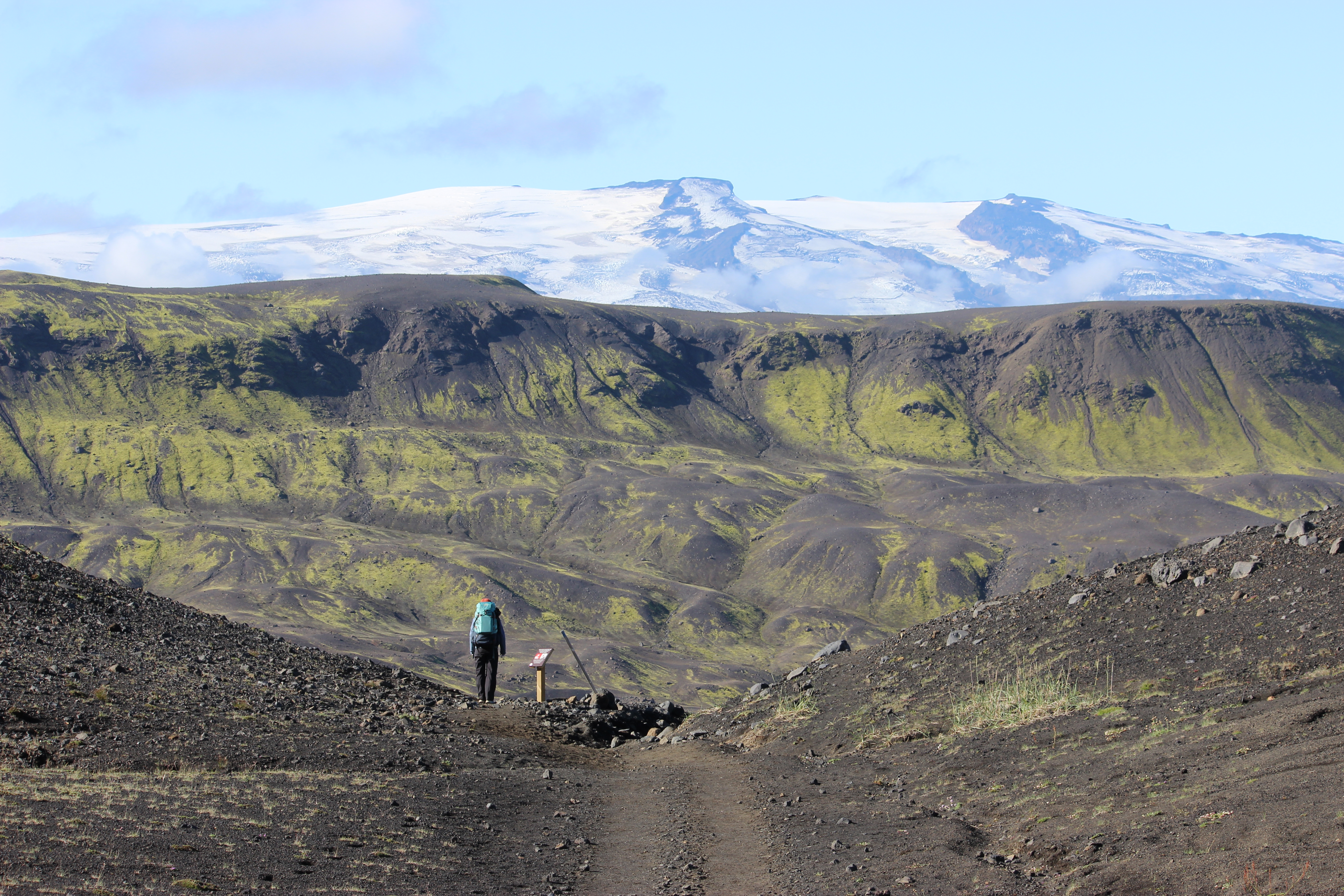
The most important thing to know about hiking the Laugavegur Trail is that the weather can change drastically in an instant. One moment you might be trekking through geothermal terrain under the glowing sun, and the next, violent winds and horizontal rain threatens to soak you to the core. Rain gear is the most essential thing to pack for the Laugavegur Trail.
Rain paints, a rain jacket, and a waterproof pack cover are three items that should be at the top of your Laugavegur packing list. I even brought a plastic rain poncho with me in case I wanted an extra waterproof layer. Pro tip: don’t go hunting for ponchos in Reykjavík before the trek! You’ll spend a fortune compared to the price you’d pay if you brought one from home (ask me how I know…).
Do you need waterproof hiking boots for the Laugavegur Trail? Not necessarily, but they might be nice to have in the event that you experience a rainy segment. My hiking boots were not waterproof, and my feet remained dry and comfortable for most of the trek, even in the rain. With the rain usually comes wind, which can help dry your shoes if they get a little wet. However, most hiking boots, even those not officially considered waterproof, have some tolerance for rain. Keep an extra pair of socks at the top of your pack!
Merino Wool Baselayers
My everyday uniform on the Laugavegur Trail was simple: Merino Wool baselayers beneath my rain pants and my rain jacket (sometimes my hoodie as an extra layer). Four full days of hiking, not a single outfit change (except the undies!), and ZERO stink.
I was nervous to invest in a pair of 100% Merino Wool baselayers because I didn’t fully understand their value. How could a pair of lightweight wool long underwear outperform my standard athletic leggings?
On a trek like the Laugavegur Trail where even in the sunshine the Icelandic cold bites, I was so happy to have my warm Merino Wool baselayers. These were a SIGNIFICANT upgrade to my standard athletic leggings.
Hiking Poles
Even though the Laugavegur Trail is relatively flat, with most of the elevation changes occurring in Segments one and two, hiking poles are a great addition to your Laugavegur Trail Packing list. They provide support on steep sections of the trail and serve as extra “limbs” on glacier and river crossings so you have less chance of stumbling on slippery conditions.
A pair of lightweight, packable hiking poles are essential for the Laugavegur Trail, and come in handy for other multi-day treks around the world. If you don’t want to use them, stash them on the side of your pack!
Sleeping Bag
No matter if you choose to stay in the huts or camp, you’ll need a sleeping bag. For hikers with hut accommodations, a lightweight sleeping bag is suitable. The huts are geothermally heated and kept warm no matter the outside conditions. Hikers planning on camping will need something considerably warmer, a sleeping bag rated for -10°C to 0°C weather. Once the sun sets, temperatures drop drastically and a warm sleeping bag is absolutely necessary for comfort and safety.
For Campers: All-Weather Tent
Campers might need a few extra items for the Laugavegur Trail, but the most important thing to pack is a sturdy four-seasons tent. If you plan to camp in the intense Icelandic conditions, your tent should be able to withstand high wind and intense rain. Consider a tent with a double-wall design that can protect you from wet conditions. If you don’t feel confident camping in Iceland, you’ll need to book hut accommodations which usually sell months in-advance (I reserved my Laugavegur hut package six months prior to my trek!).
Gloves (UPF Sun Gloves, Fleece Gloves, Waterproof Kitchen Gloves)
Three types of gloves seems unnecessary until you’re actually hiking on the Laugavegur Trail and find each to be useful for specific weather conditions.
I brought my UPF sun gloves from Solbari, a brand I not only use for hiking, but also use for driving, walking, horseback riding and any other activity that has me in the sun. These were great for warm days when I wanted sun protection, but didn’t need extra warm fleece gloves.
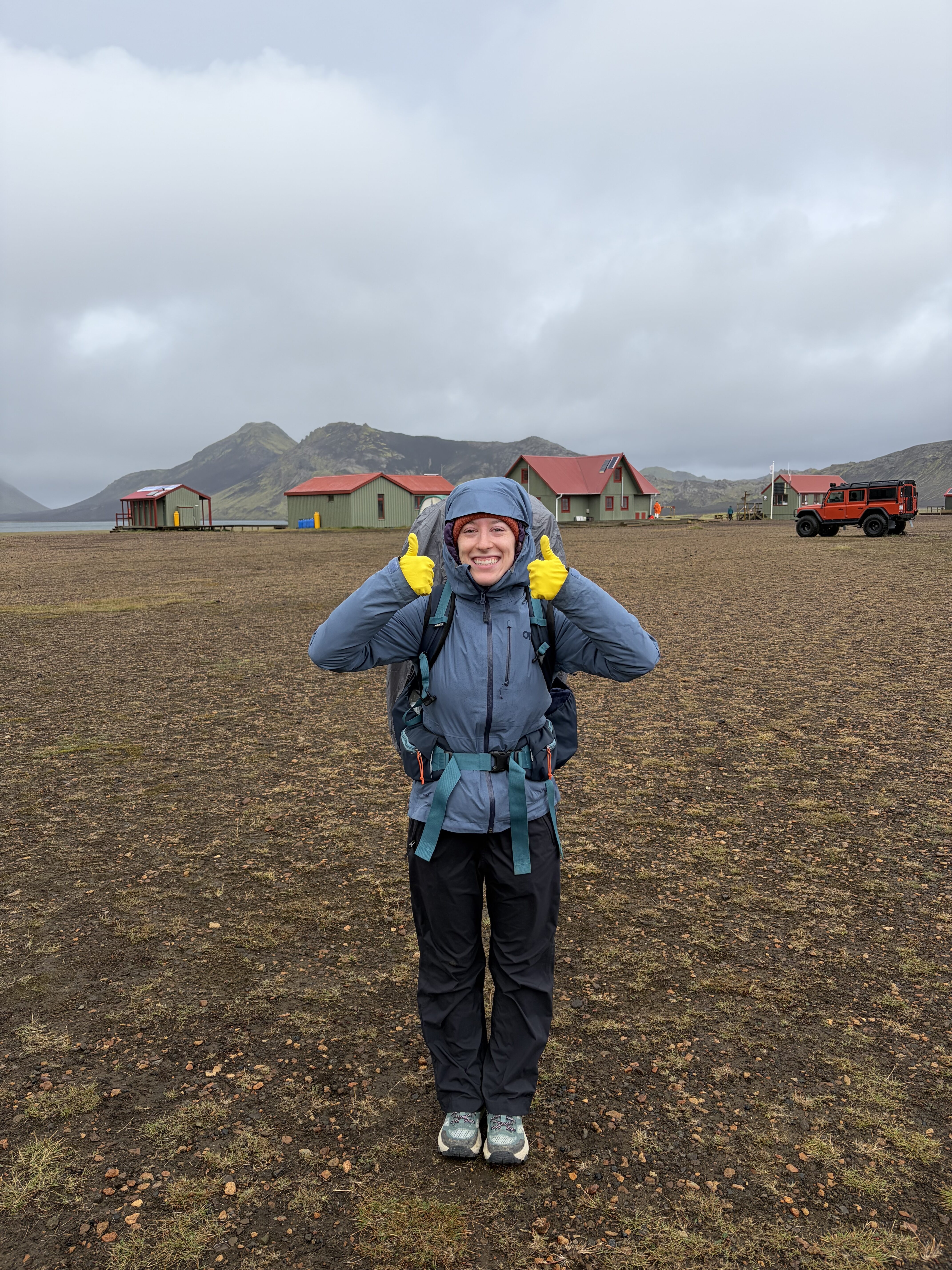
As the elevation climbed, the temperature dropped, and snow fell on Segment 1 leading up to the high elevation mountain hut, Hrafntinnusker, my fleece gloves beneath a pair of bright yellow waterproof kitchen gloves became my most valuable items on my Laugavegur packing list. Cold hands? I despise them. Every hiker on the trail LOVED my genius, budget-friendly glove hack for wet weather. And I didn’t have to worry about cold or wet hands on the trek. Gloves are lightweight, even if you bring three pairs, so don’t forget to pack them!
Water Shoes (For River Crossings)
There are several river crossings on the Laugavegur Trail. Most of the water fed into these rivers comes from the monumental glaciers near the trail. Words can’t even describe how cold the water was while I slowly trudged from one bank to the other! A pair of water shoes or your favorite hiking sandals are great items to have for the river crossings. You’ll still experience the freezing temperature, but you’ll have an easier time navigating uneven, rocky conditions than if you walked barefoot.
Headlamp
A headlamp is a useful tool to pack for hut-to-hut hiking trips. Whether you’re staying in a Laugavegur hut or camping in a tent, headlamps are useful when the sun dips below the horizon (unless you’re hiking during a month where the sun doesn’t set!).
When I completed the trek in late August, the sun would set around 8:30-9:00pm. When the lights went out in the hut or I needed to find my way to the bathroom, my headlamp was essential for navigating in the dark. If you’re a late night reader like myself, you’ll also appreciate having a small light to read in the dark!
Anker Power Bank
Except for Landmannalaugar and Thórsmörk huts, the start and end of the trail, there is no way to charge your phone or any electronics in the huts along the route. The same is true if you camp.
I brought two Anker power banks, a compact 10,000mAh power bank and a larger 20,000mAh power bank. Before embarking on my four day hiking trip, I made sure these power banks, along with my camera batteries, were charged to maximum capacity. Since most of the Laugavegur Trail is off-grid with no cell service, you won’t really have much use for your phone, except to take photos. Keep it on airplane mode for the trek and use your power banks when your battery runs low!
These Anker power banks have been some of my most useful tools for multi-day hikes around the world.
EarPlugs
Depending on the specific accommodation, the Laugavegur huts can fit between 50 to 78 people. The chances of you sleeping next to a snorer in one of the huts is fairly likely. In the case that your bunkmates snore, bring earplugs! As a light sleeper, earplugs were a no-brainer for my Laugavegur Trail packing list!
Backpacking Meals
Even though the huts on each Laugavegur segment offer a small collection of backpacking meals and snacks for purchase, I HIGHLY recommend you bring your own meals with you instead of buying them in Iceland.
Why is it necessary to pack your own backpacking meals for the Laugavegur trek? Iceland is incredibly expensive, one of the most expensive countries to visit in the world, so you can expect to pay high prices for anything, including freeze-dried meals. I purchased my backpacking meals from REI for about $10-$12 USD each. The freeze-dried meals for purchase by the wardens at each Laugavegur hut were about $30 USD each, nearly THREE TIMES the cost of the meals I brought with me!
Sunscreen/Sunglasses
Even though it might feel cold on the Laugavegur Trail with the sun shining, tricking your brain into thinking you can’t get sunburned, it is always a good idea to wear sunscreen and sunglasses to protect your skin and eyes from the sun. When I’m hiking, I like to wear Blue Lizard sheer mineral sunscreen and my polarized sunglasses.
What Size Backpack Should I Bring for the Laugavegur Trail?
The size of backpack you bring for the Laugavegur Trail depends on the following things:
- Hiking the Laugavegur self-supported vs with a guide company
- Whether or not you stay in huts or camp
- The state of your gear, newer tends to be more lightweight than older gear
- Your Laugavegur hiking itinerary (how many days will you be on the trail?)
- Packing style (are you a light packer or an over-packer?)
Self-Supported vs Guide Company
If you hike the Laugavegur Trail self-supported, on your own itinerary, you’ll need to carry all your gear in a single pack. Your sleeping bag, tent (if you camp), layers, hiking poles and other items listed in the Laugavegur Trail packing list above should all fit in your pack. Hikers completing the trek self-guided can get away with packs sized between 40-65L.
Most hikers joining a group excursion with a guide company will have two backpacks: a small daypack you carry during each segment, that holds water, lunch, snacks and lightweight layers, and your larger backpack with all other gear/items that gets portered from hut-to-hut. Small daypacks should be about 30-40L, while your larger backpack can be between 45-55L.
Huts vs Camping
Sleeping in the Laugavegur huts certainly requires less gear than camping, therefore you might be able to hike with a smaller backpack, 40-55L depending on your itinerary. If you plan to camp, you’ll need a pack large enough for your tent, sleeping bag, and other necessary camping gear. A backpack between 50-65L is usually a good size for multi-day backpacking trips with tent camping.
Weight of Your Gear
Sometimes, the best you can do is pack the gear you have, even if it’s a little heavy and outdated. Newer hiking gear, especially backpacks and sleeping bags, often have high-tech designs that lighten the weight.
The gear I packed for the Laugavegur Trail was old and heavy, which added extra weight to my already large 55L backpack. Did I need such a heavy sleeping bag for the huts? Definitely not. However, I didn’t want to buy new gear before the trek. Consider the weight of your gear when packing for the Laugavegur Trail – it might affect your pack size.
Laugavegur Hiking Itinerary
Depending on your fitness level and the available hut packages, you can hike the Laugavegur Trail in three or four days. Most campers will choose the shorter itinerary to avoid camping in the rugged, high elevation terrain surrounding the Hrafntinnusker hut. The three-day Laugavegur itinerary combines Segments one and two in a single day (24 total kilometers), then finishes Segments three and four in the following two days. If you’re staying in the huts, your Laugavegur itinerary might include Hrafntinnusker, allowing you to complete each segment on a separate day (four days total).
The time it takes you to complete the trail will affect your pack size. Hikers with shorter itineraries can get away with smaller packs, the standard itinerary might require a slightly larger pack.
Related Read…
Get a detailed look at each segment of Iceland’s best multi-day trek in this Laugavegur Trail hiking guide!
Packing Style
As a chronic overpacker, I had some growth to do before packing for the Laugavegur Trail. For the sake of my spine and shoulders, I needed to get over my habit of packing too much “just in case”. My 55L backpack was all I had, so I made sure to pack effectively to keep my pack light. As long as you have the essentials from my Laugavegur packing list shown above, you don’t need to pack additional items!
The Footwear Debate: Do I Need Hiking Boots for Laugavegur?
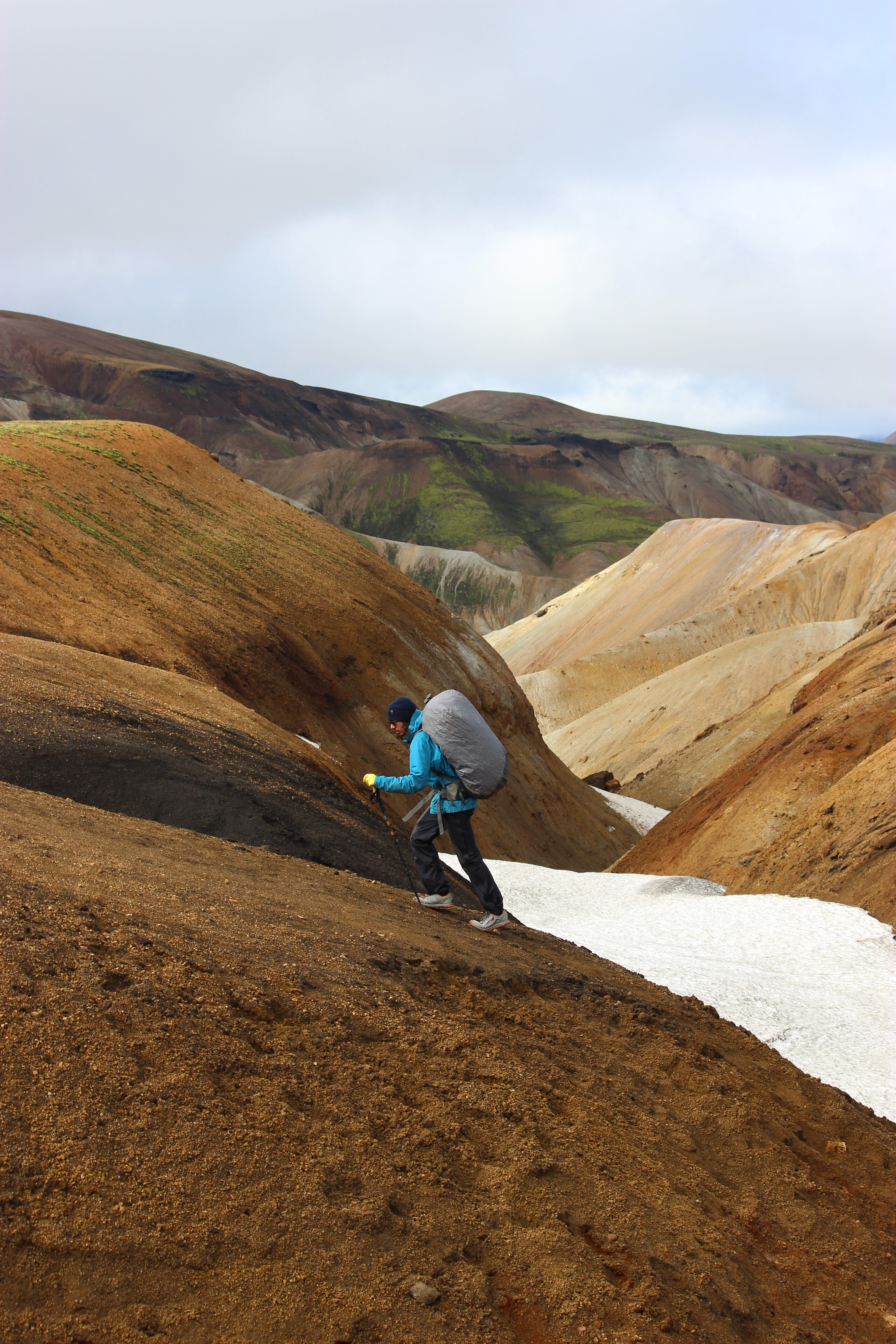
You do not need hiking boots for the Laugavegur Trail, though they are a worthy investment for this hut-to-hut hike in Iceland! Hiking boots, trail runners, or even standard tennis shoes are great options. The most important thing is to pack shoes that are comfortable and well-worn. You’ll be hiking between 12-16 kilometers everyday, more if you combine segments, so a comfortable pair of hiking shoes will make the trek more enjoyable.
For the Laugavegur Trail, I wore my pair of Tevas hiking boots, which have great tread, ankle support and comfortable soles. I also packed a pair of lightweight trail runners, an extra set of shoes I thought I would need but didn’t end up using. A single pair of comfortable hiking shoes is all you need!
Do I Need a Water Filter for the Laugavegur Trail?
Unless you plan to drink from the streams on the trail, you do not need to pack a water filter for the Laugavegur Trail. Water is one of the ONLY things you can get for free in Iceland. At the Laugavegur huts, there are designated areas where you can fill your water bottle with filtered Icelandic water. Before starting your segment, fill your reusable water bottle. A standard 32oz water bottle is sufficient for hikers completing the trek in three or four days.
What NOT To Pack for the Laugavegur Trail
Drones
The Laugavegur Trail in the southern highlands of Iceland is protected land, therefore drones are NOT allowed! I packed my drone for Iceland, hoping to get incredible shots while hiking, but the wardens had told me that drones were not permitted on any section of the Laugavegur Trial. Consider leaving your drone behind, otherwise you’ll be carrying deadweight for the entire 55 kilometer trek!
Bulky Sleeping Bag (If Staying in Huts)
The Laugavegur huts are geothermally heated and kept cozy in all weather conditions. Even the Hrafntinnusker hut, which sits at the highest elevation of the trail, was incredibly warm. If you’re staying in the huts rather than camping, leave your bulky sleeping bag behind. I brought a heavy 20°C sleeping bag, thinking I would be cold. Most of the time I slept outside of my sleeping bag because it was too warm for the conditions in the huts! Opt for something lightweight.
Note: If you choose to camp instead of staying in the huts, your sleeping bag will need to be rated for -10°C to 0°C, which might be a bit larger than sleeping gear carried by hut-sleepers.
Brand New Hiking Boots
If you’re a beginner hiker, thinking about bringing a brand new pair of hiking boots to Iceland, think again…
Before you embark on a multi-day hiking trip in Iceland, make sure to get some use out of your new hiking boots. This will help prevent discomfort and blisters, which can make a challenging trek even more difficult!
Where to Rent Hiking Gear in Iceland
If you want to rent hiking gear in Iceland for the Laugavegur Trail, I recommend reserving and renting from Iceland Camping Equipment. Located in the BSI Bus Terminal in Reykjavík, the place where you’ll catch a bus to the start of the Laugavegur Trail, this convenient rental supply offers everything including tents, sleeping bags, crampons and even waterproof clothing! Iceland Camping Equipment is open from 9:00am to 5:00pm all year, and provides 24/7 drop-off/pick-up with advanced notice.
If you don’t have the necessary gear for the Laugavegur Trail and would rather not spend the money to buy it, consider renting from Iceland Camping Equipment before your trek!
Laugavegur Trail Hiking Outfits: What to Wear on the Trek
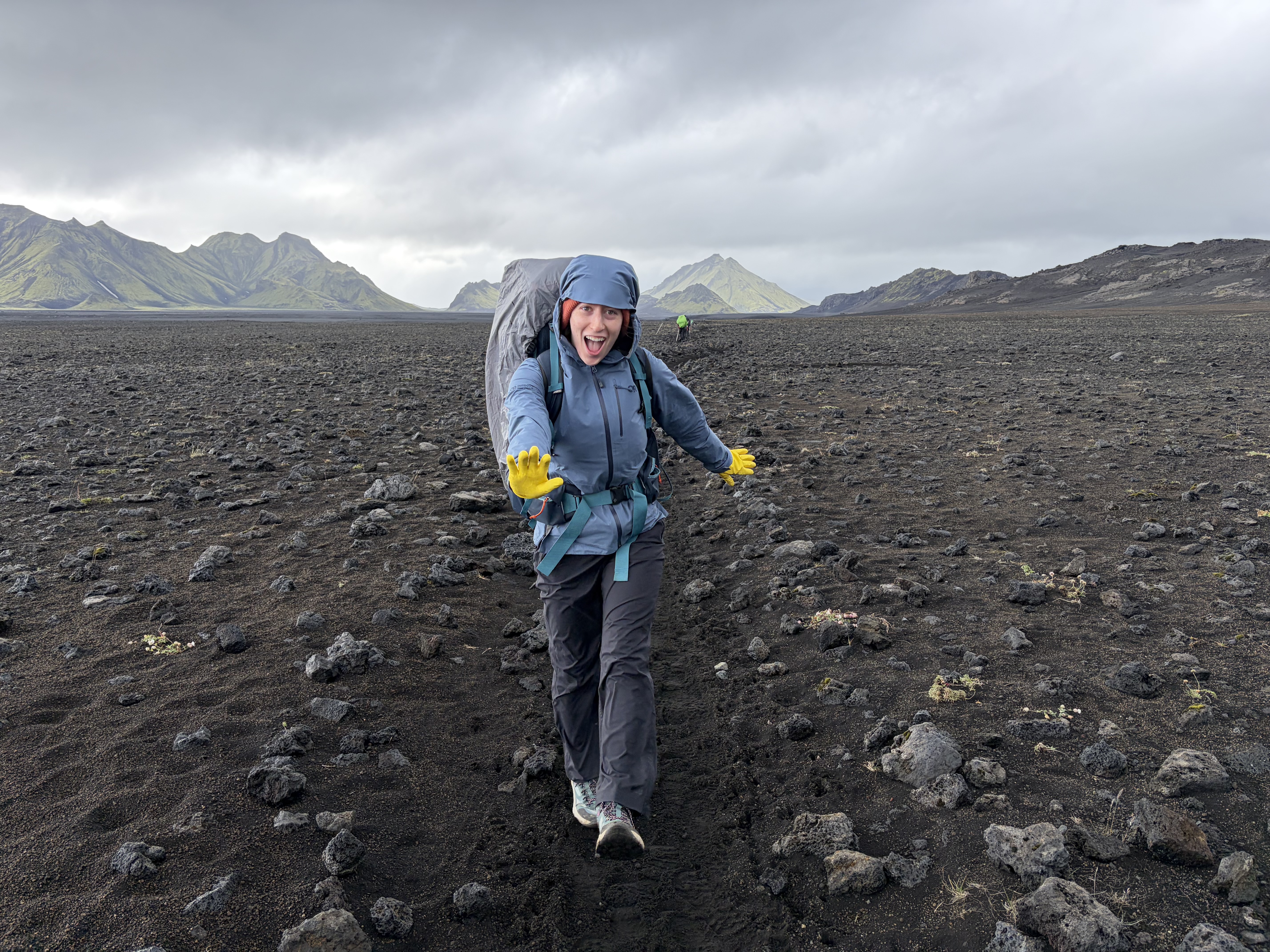
The cutest hiking outfit you can wear is a functional one that keeps you warm, dry and protected from the elements.
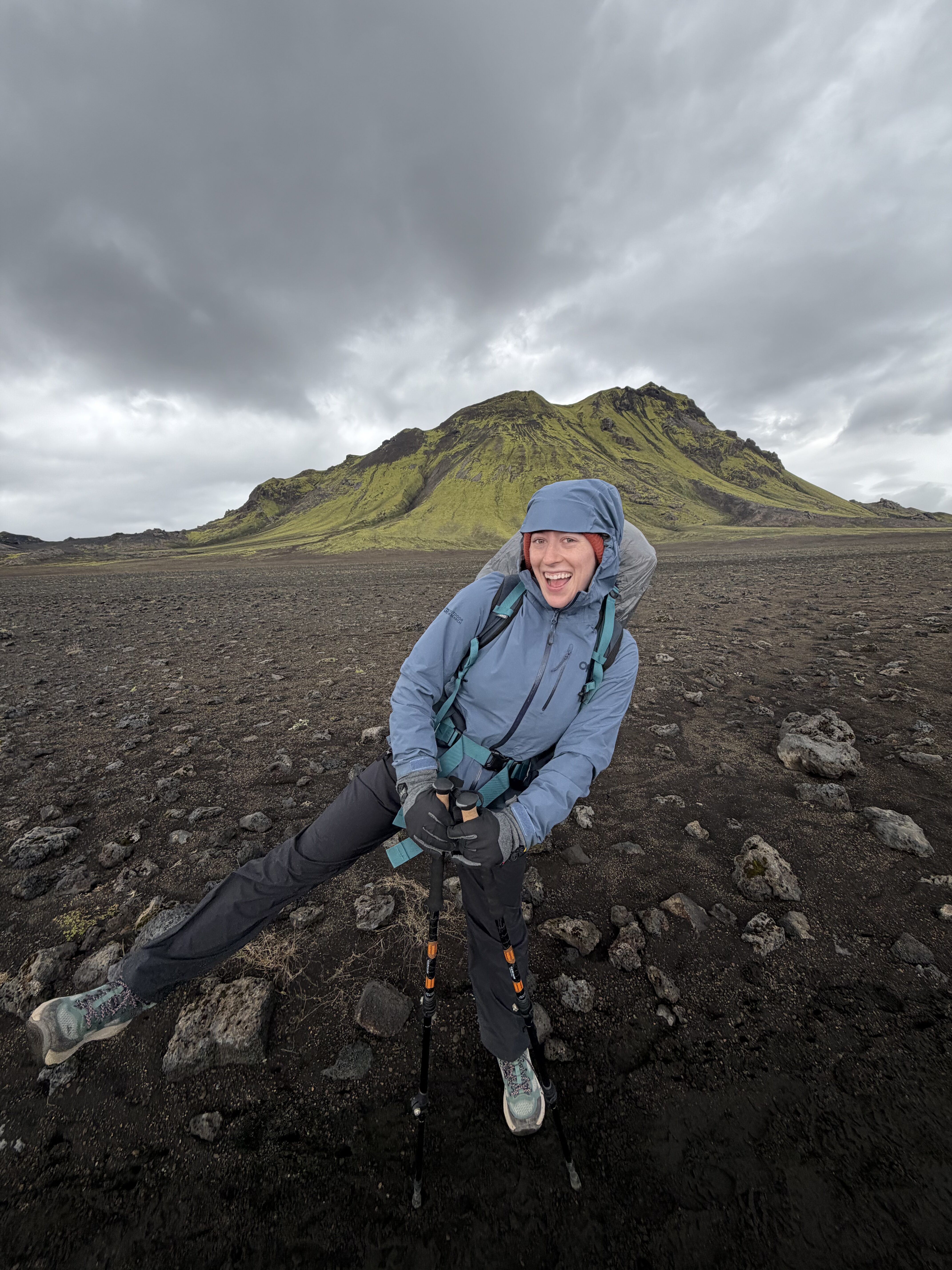
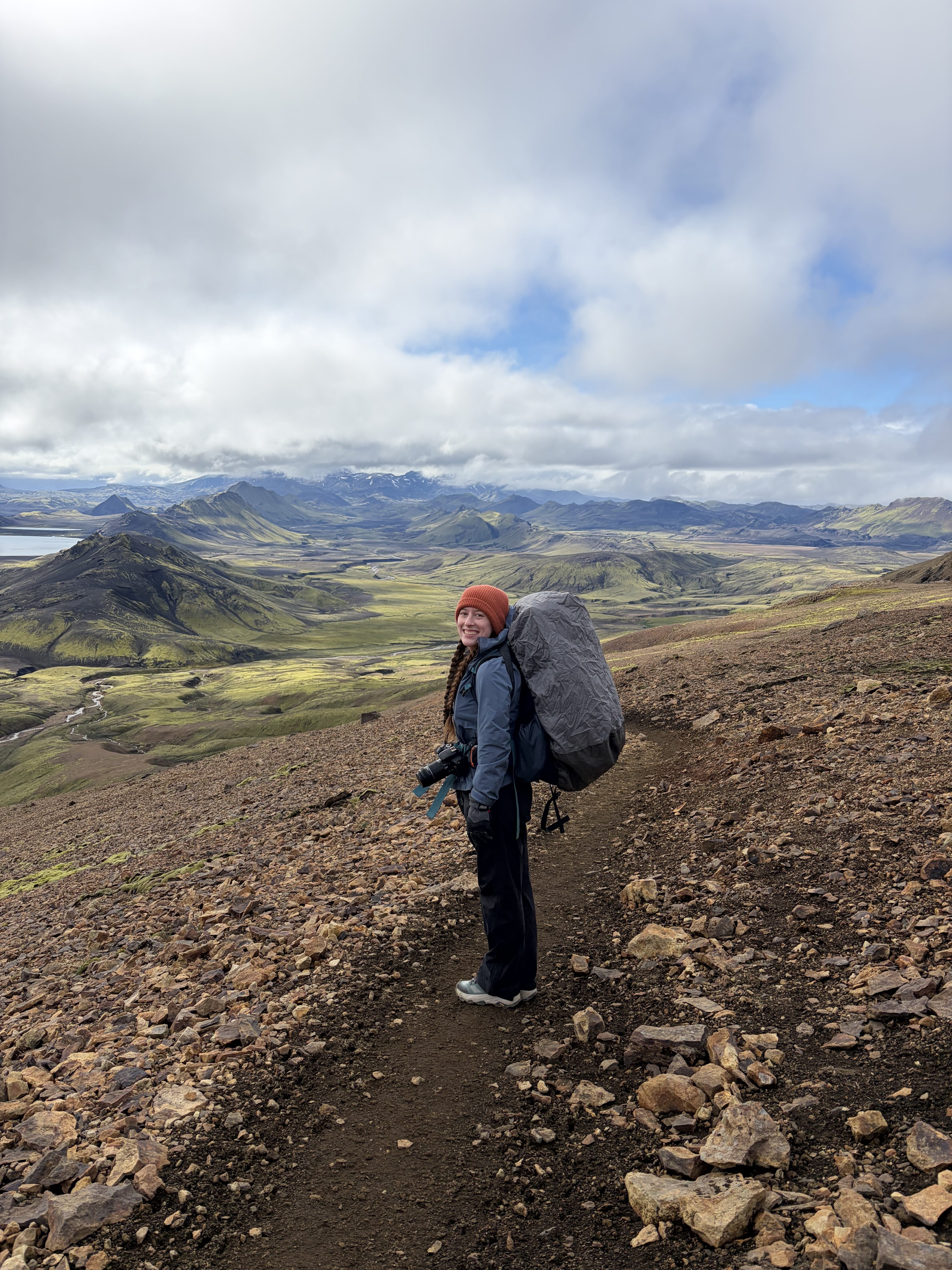
Start with Merino wool baselayers, which keep you warm, dry, and stink-free for the entire trek (tried and true!). Rain pants and a rain jacket can layer directly over your wool baselayers to keep you dry from wet weather and reduce wind exposure. A beanie is perfect for windy days, otherwise your favorite ball cap works well for sun protection! Beneath your hiking shoes of choice, Merino wool socks will keep your feet warm. Lastly, if you want to wear a pair of gloves, I highly recommend UPF-rated sun gloves in sunny conditions, or lightweight fleece gloves beneath waterproof latex kitchen gloves in wet conditions!
Have fun hiking the Laugavegur Trail! It is incredible!
Frequently Asked Questions
Quick Answers to Common Questions
Want to explore even MORE Iceland content?
Check out my latest Iceland Posts BELOW!
Laugavegur Trail Guide: The Best Multi-Day Trek in Iceland
What to Pack for the Laugavegur Trail (and What NOT To Pack!)