What to Pack for Acatenango Hike (and What to Leave Behind!)
Hey traveler! As a Biochemical Engineer, I love optimizing things—including the perfect travel experience! This post contains affiliate links, which means I may earn a small commission if you book or buy something through my links, at no extra cost to you. I only recommend travel experiences I truly believe will make your adventures even better. Your support helps keep Beauty and the Bucket List running—thank you!
When I traveled to Guatemala, I had a suitcase full of flowy skirts and colorful bathing suits.
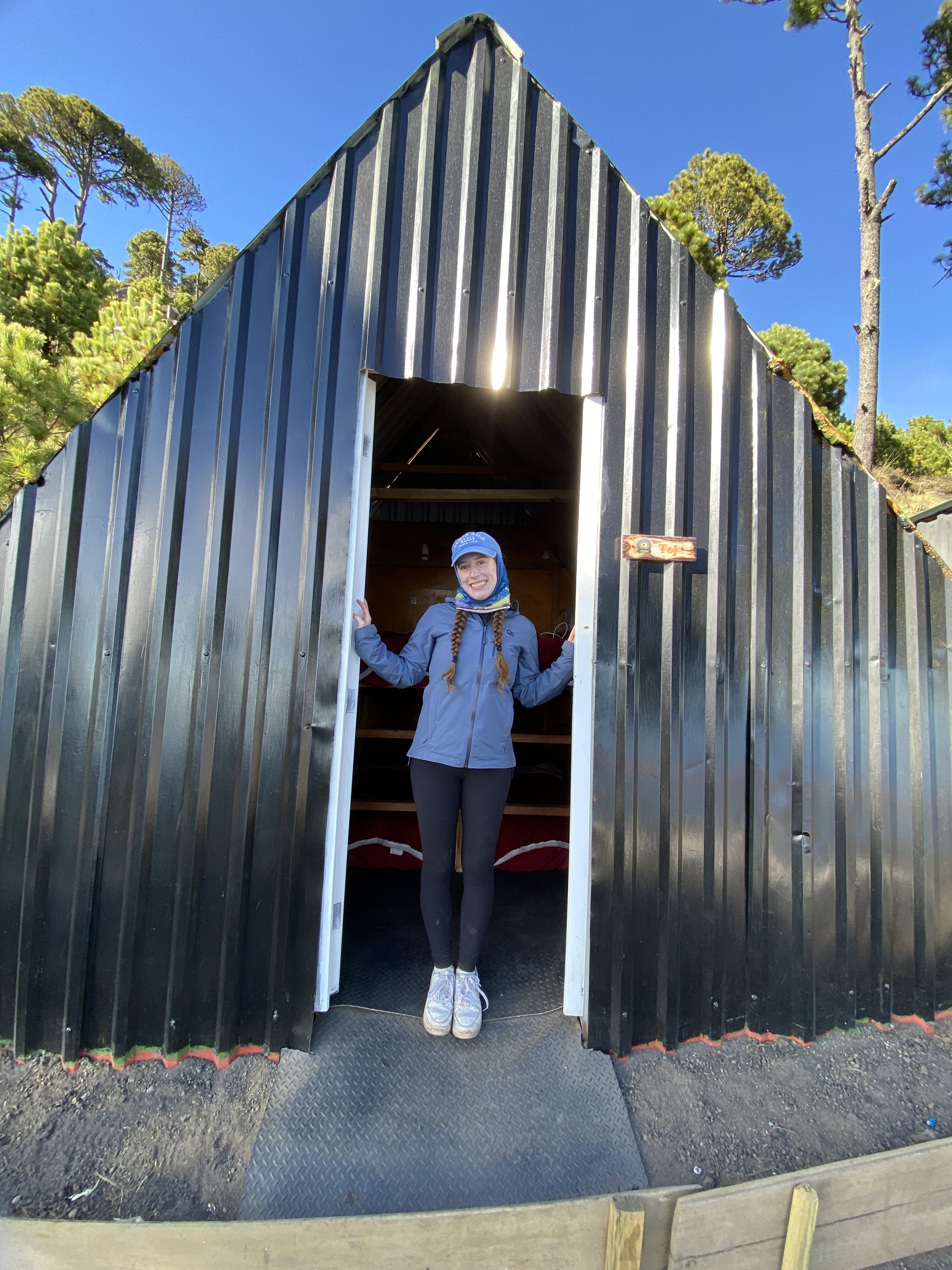
But I knew that my “beachy items” – the essentials for the sun-kissed villages of Lake Atitlán and the warm colorful streets of Antigua – would not be suitable for my adventure up Acatenango Volcano where daytime temperatures could be scorching but the nighttime temperatures dip below freezing. I struggled with deciding what to pack for Acatenango knowing that most of my hiking items were bulky and would only be used for one specific segment of my Guatemala itinerary.
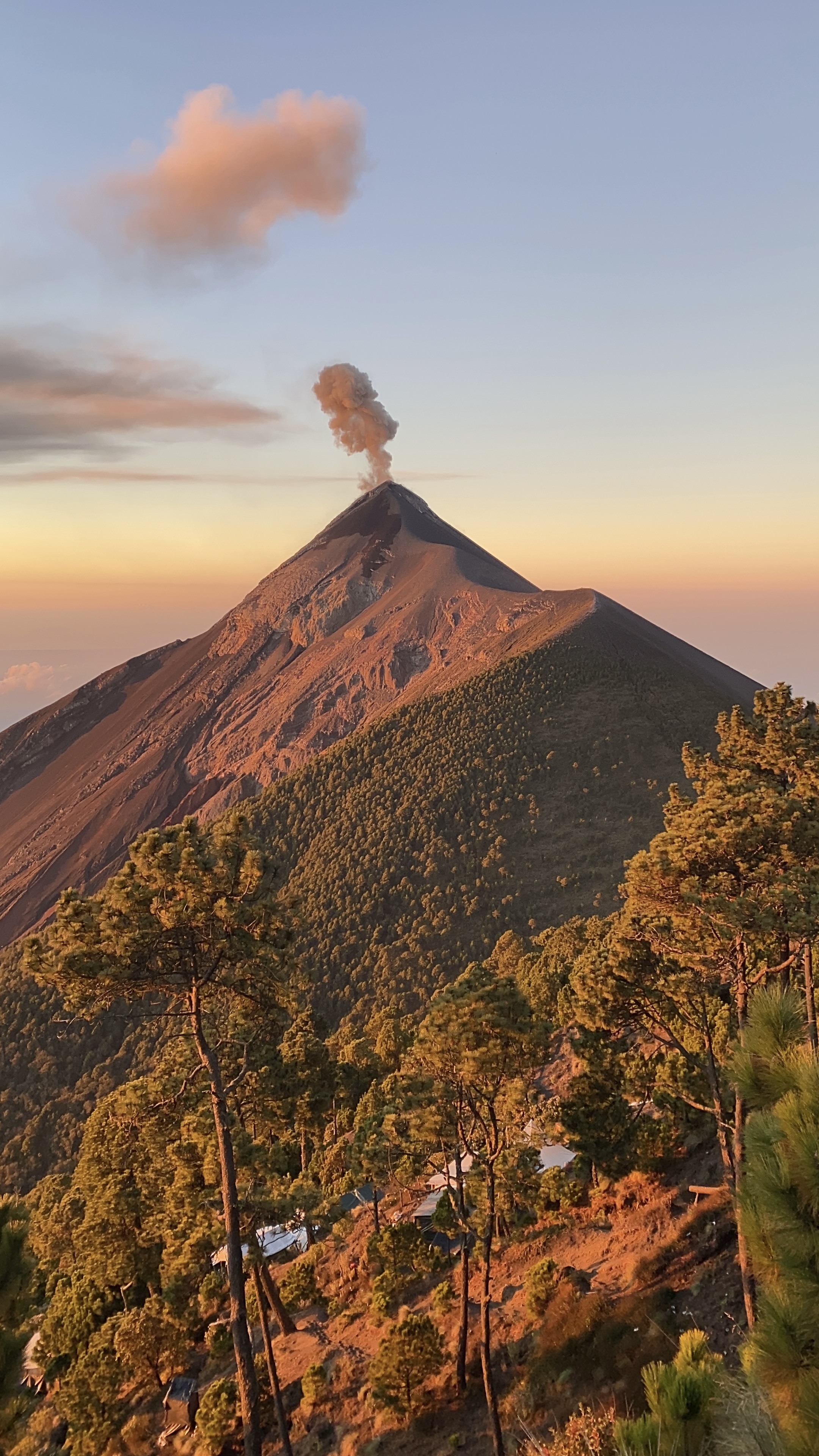
After completing the unforgettable trek to Acatenango base camp and spending the same evening trudging up the steep slope of the then-active (violently) Fuego Volcano, I realized exactly why I needed all those warm base layers and why I didn’t need the heavy pillow (which I don’t travel without) and all the other non-essential items I packed.
This detailed Acatenango packing list will help you compile the essential items for your trek – or provide recommendations for where to rent hiking gear in Antigua – so you can enjoy a stress-free hike up to Acatenango base camp.
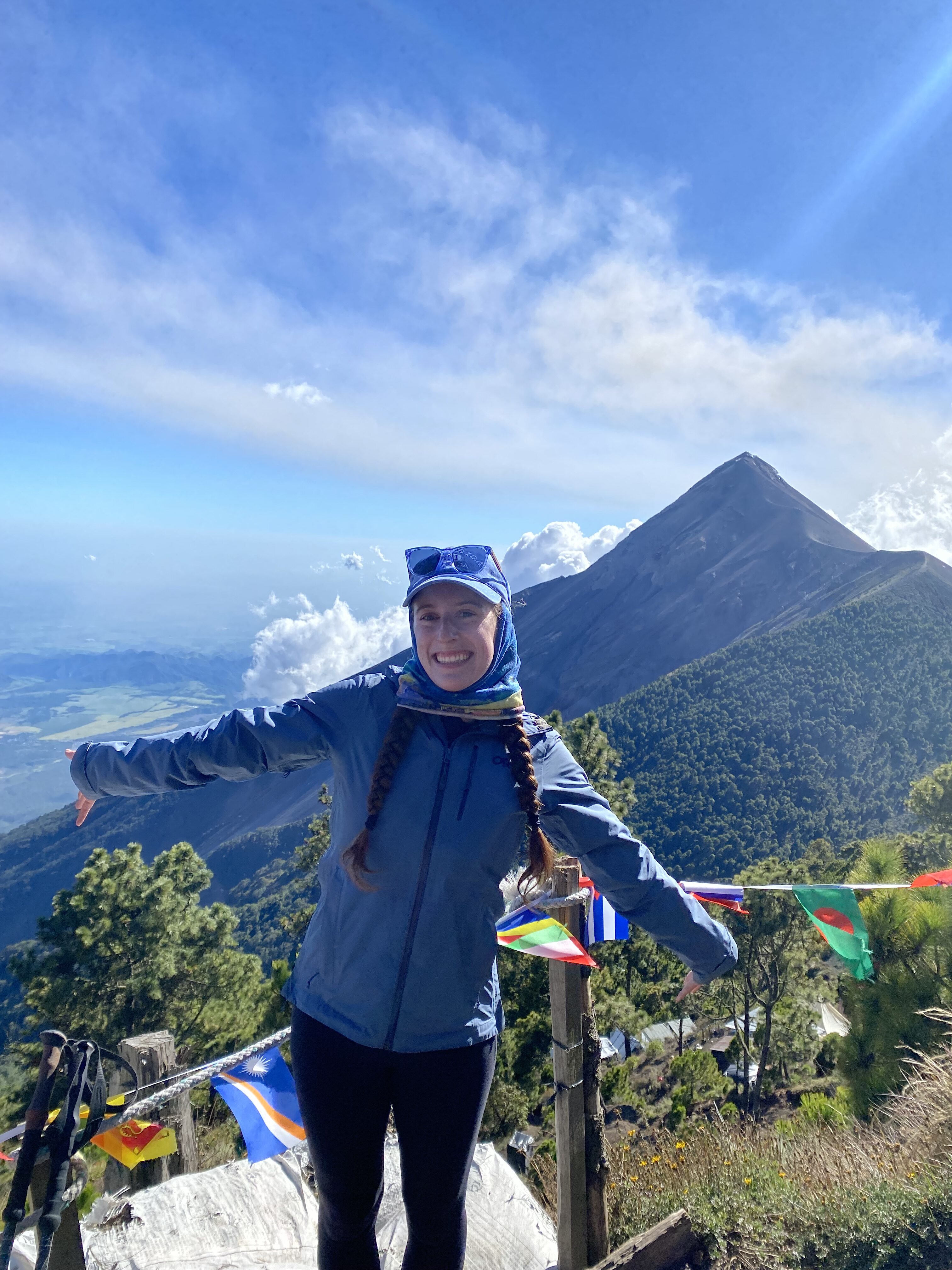
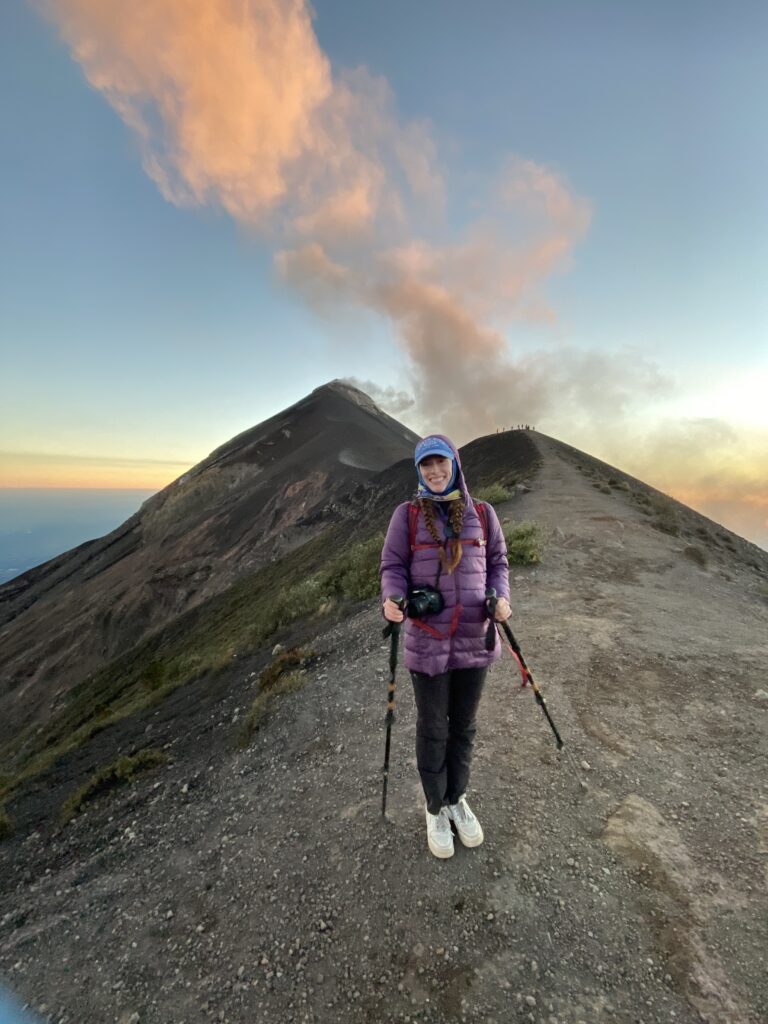
What kind of backpack should I bring for Acatenango? Do I need hiking boots for Acatenango? How can I make my daypack as light as possible for Acatenango?
As an experienced backpacker and someone who has overpacked MANY times in the past (keyword: PAST), I’ll answer all your questions about packing for the Acatenango hike. Once you reach the trailhead with your local guide company, you’ll feel well-equipped to handle all kinds of weather that the monumental volcano might throw at you.
Read more to discover what to pack for Acatenango, and if you want to get a closer look at a PTO-friendly Guatemala itinerary, add my blog post, 8 Days in Guatemala to your reading list!
A Quick Look: Acatenango Packing List
Clothing Items:
- Merino Wool Baselayers (x1 long sleeve shirt and x1 long underwear)
- Rain Pants (lightweight shell in case of weather)
- Rain Jacket or Poncho
- Socks (x2 – standard for hiking, thick wool for sleeping)
- Underwear/Undergarments
- Fleece Mid-layer
- Down Puffer Jacket or Lightweight Coat
- Face Buff/Balaclava
- Hats (ball cap for day, beanie for night)
- Fleece Gloves
- Waterproof Gloves (in case of rain; MORE info below for my budget-friendly rec!)
Personal Care Items
- Dude Wipes (or other wet wipes)
- Travel Hand Sanitizer
- Small Hairbrush (if applicable)
- Travel Toothbrush and Toothpaste
- Contact Solution (if applicable)
- Toilet Paper, Wag Bag
- Deodorant
- Feminine Products (if applicable)
- Advil and Other Medications
- Altitude Sickness Medication (Acetazolamide)
- Earplugs
Hiking Gear
- Hiking Poles
- Headlamp
- Comfortable Hiking or Walking Shoes (MORE information below about the footwear debate!)
- Hand/Foot Warmers
Food and Water
- 4-6 Liters of Water (depends on how much you drink and guide company recommendations!)
- Hearty snacks (trail mix, pastries, granola bars)
- Lunch box (usually provided by tour group)
Tech Items
- Anker Powerbank
- Quick Charge Cable for Phones (and other electronics)
- Camera gear + Batteries
Most Important Things to Pack for Acatenango and WHY
Every single item listed on my Acatenango packing list is essential for you to pack for an incredible overnight experience on Guatemala’s most popular volcano. Below are a few items I don’t travel without, and WHY I think you should pack them too, when climbing volcanoes, mountains, or hiking from hut-to-hut in destinations all over the world!
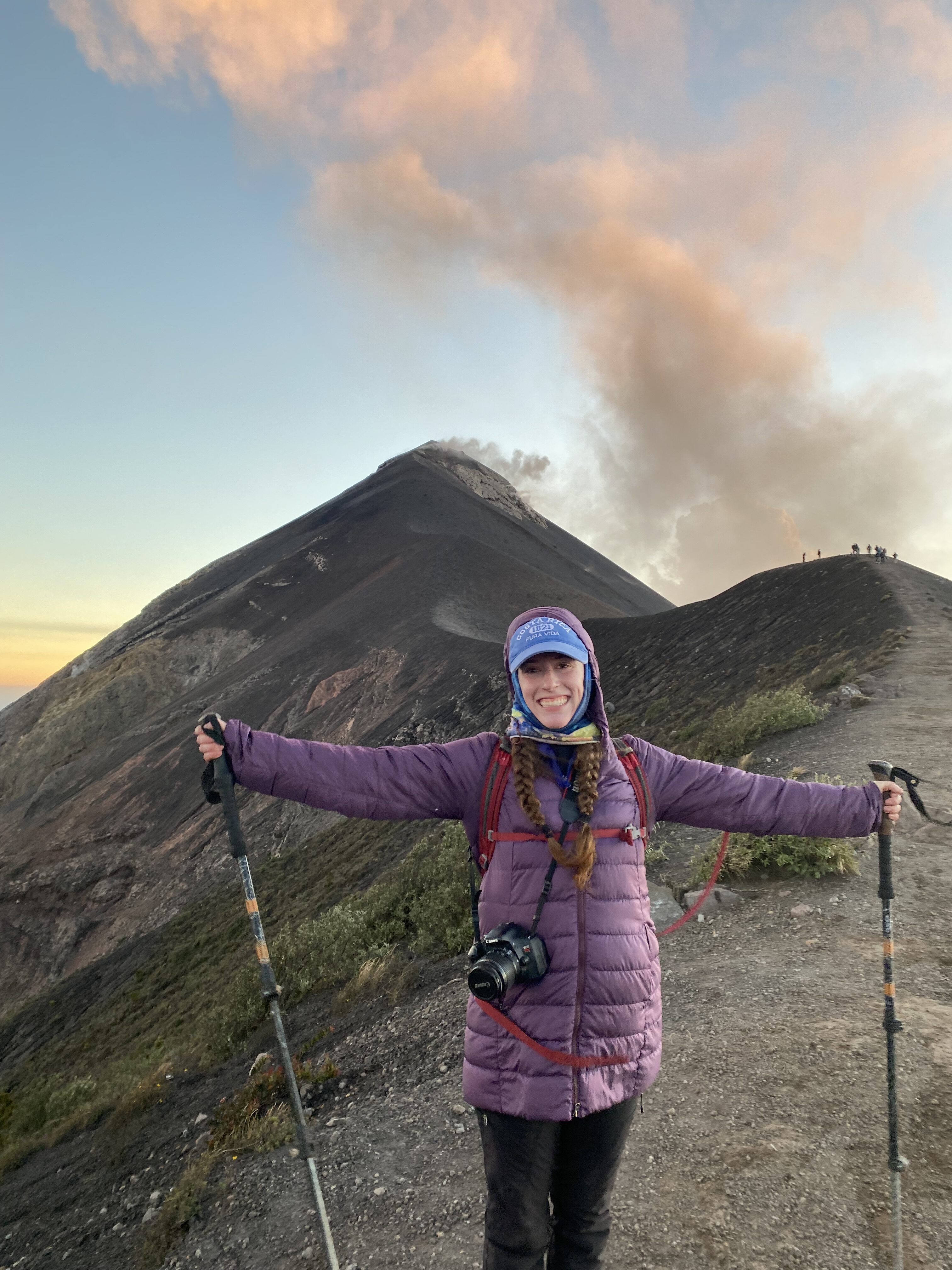
Hiking Poles
Among the obvious items for the most important things to pack for Acatenango – like water and warm layers – is a pair of lightweight hiking poles. For all my advanced treks prior to climbing Acatenango, I never used hiking poles. But as I approached the rental counter at my guide company’s home base in Antigua, I felt the urge to try them out.
As I climbed towards basecamp, trudging through the loose volcanic sand, I was grateful to have a pair of hiking poles for additional support. With every near-vertical step towards the summit, I felt my body inch down towards the start of the trail. The hiking poles served as a stake in the ground of which I could lean on to prevent myself from sliding.
Similarly, my rented hiking poles were useful on the descent of both Acatenango and Fuego. My old pair of AF1s had no traction and those poles were the main reason why I didn’t slip and roll down the volcanoes. Even if I had a pair of sturdy hiking boots, I would have wanted the support of hiking poles.
If you have a pair of lightweight hiking poles, bring them with you to hike Acatenango. If you don’t own a pair of poles, most guide companies will have an option to rent them.
Merino Wool Base Layers
There’s a significant difference between standard polyester athletic wear and Merino wool base layers. Cold seeps into polyester, chilling you from skin to bone. Wool acts as a breathable barrier to the cold, keeping you warm, dry and preventing stink (even AFTER several sweaty days of hiking, which I learned after five days on the Laugavegur Trail in Iceland!).
Wool base layers, while a considerable initial investment, prove to be one of the most useful items for hiking and an essential thing to pack for Acatenango.
When the sun sets on basecamp, the cold seeps in. Even the enclosed A-frame cabins offered by many guide companies become freezing at night. My favorite wool base layers are from Ridge Merino, a California-based company that specializes in Merino clothing with sun protection. Do yourself a favor and pack wool base layers and wool socks for the chilly night at Acatenango base camp!
Gloves (UPF Sun Gloves, Fleece Gloves, Waterproof Kitchen Gloves)
For overnight hiking experiences like the Acatenango Volcano hike or hut-to-hut experiences around the world, I like to have THREE sets of gloves with me. All are lightweight and add nearly zero bulk to your pack, but prove to be essential for different weather conditions you’ll experience when hiking Acatenango Volcano.
My UPF Sun Gloves from Solbari are my favorite gloves for general sun protection on my hands. Hands and fingers are one of the places where people tend to forget to apply (and re-apply) sunscreen. Lightweight sun gloves eliminate the need to remember to apply sunscreen. Driving, horseback riding, hiking. You name it, I’m wearing my UPF sun gloves.
In addition to sun gloves, I also recommend bringing a pair of fleece-lined gloves for cold weather. Standing on the side of Fuego Volcano while we watched as violent eruptions painted the sky orange, I was so grateful to have my fleece gloves to keep my hands warm. The wind and cold on Fuego Volcano bite, gnawing at your fingers until they are red and senseless. Fleece gloves can eliminate the pain from the cold.
Lastly, one of my favorite budget-friendly hacks for hikers who might face wet conditions is to buy a pair of latex kitchen gloves. These are certified waterproof and cost nearly nothing – especially compared to the “high-tech” waterproof gloves sold by outdoor brands – making them a perfect waterproof layer to fit over another set of warmer gloves.
Face Buff, Balaclava or Protective Mask
Even though most guide companies provide face buffs as one of the included items, I was surprised to see that some hikers chose not to bring them. The trail up to Acatenango base camp consists of loose volcanic sand and fine dirt that is easily kicked up when hiking groups trudge towards the summit.
A buff, balaclava or a protective face mask can prevent you from inhaling dust particles that might make it harder to breathe. Acatenango base camp sits around 3,500 to 3,800 meters (~12,000+ feet!) and for many travelers that elevation alone can cause difficulty breathing. Don’t let the dust make it even harder!
Additionally, the buff/balaclava becomes very useful in the late hours of the night when the temperature drops. Having something to shield your face from the cold, especially if you plan to hike up Fuego Volcano, is a great idea.
Hand Warmers
The one item I didn’t pack but wished I had with me was a pair of hand warmers I could put into my gloves. My tour company, Wicho and Charlie’s, provided lightweight gloves (included in the tour price) which were great during the day. However at night, these lightweight gloves provided no warmth for my hands. As I was shivering in my sleeping bag, I wished I had upgraded my gloves to the “premium” option at the company’s gear rental counter. A pair of hand warmers would have been beneficial!
Headlamp
A headlamp is one of the few items that most tour companies provide when you book the tour.
Like the several liters of water they require you to bring, you’ll need a headlamp if you want to do the additional hikes after you arrive at Acatenango base camp. For the evening hike to Fuego Volcano and the sunrise summit to the top of Acatenango you’ll spend some of your time hiking in the dark. Hiking without a headlamp is not feasible and could potentially be dangerous.
Even when I’m not deliberately hiking in the dark, I like to bring my headlamp with me on hiking trips, backpacking adventures and multi-day hut-to-hut trips. I love to curl up in my sleeping bag with my book (yes, I bring a physical book, despite the added weight!), reading under the glow of the headlamp!
Anker Power Bank
Out of the hundreds of options online for portable and lightweight power banks, the Anker Power Bank is the BEST one.
I’ve tried many power banks ranging in price, size and weight and the Anker Power Bank lasts the longest despite its small, packable size. For the Acatenango hike, you should only need a compact power bank with 10,000mAh. My 10,000mAh Anker Power Bank can charge several iPhones or a few drone batteries. This lightweight device was the perfect portable charger to add to my Acatenango packing list.
For longer backpacking trips or hut-to-hut trips, I also have a 20,000mAh Anker Power Bank which is slightly larger (and therefore heavier) but can charge twice as many devices.
Altitude Sickness Medication
If you’re traveling to Guatemala for the Acatenango hike from sea level, I highly recommend spending a few days acclimating to the elevation in Antigua before starting the trek.
Antigua sits at an elevation of about 1,500 meters (~5,000 feet) – pretty close to the elevation of Denver, where I visited from – and can be quite a different experience for travelers not used to elevation.
Even coming from Colorado, which is at ~5,280 feet above sea level, I still brought altitude sickness medication, Acetazolamide (brand name Diamox), just in case I needed it on the hike. The hike gains elevation rapidly, going from 1,500 meters to ~3,600 meters, which can have a tremendous effect on hikers, even those already acclimated to high elevation. In addition to altitude sickness medication, bring Ibuprofen for headaches or muscle aches.
Earplugs
Acatenango hiking tours are usually done in moderately large sized groups, between ten to fifty-plus people depending on the guide company. Chances are, you’ll be sharing a tent or a cabin with the hikers in your group. And with a large group size, there will inevitably be people who snore. In addition to the snoring, you’ll also hear the echoes of the loud eruptions from Fuego Volcano, if it’s active and exploding. Earplugs are the one thing that most people forget to pack for Acatenango! I can’t travel without them.
Sweet Treats from Doña María Gordillo
Even though your guide company will keep you full and happy at Acatenango base camp, for dinner after the long day of hiking and breakfast the following morning before the descent, it’s always a good idea to have a few snacks with you for the trek.
Before starting the Acatenango overnight excursion, I stumbled on a historic sweetshop in downtown Antigua called Doña María Gordillo. Bombarded by the sweet scents of delicate Central American pastries, I couldn’t pass by this sweet shop without getting a box of local treats.
That box of local treats took up a considerable amount of space in my daypack, but proved to be a great snack for the hike to Acatenango base camp. Our final uphill ascent to Fuego Volcano saw the end of those pastries: I devoured them before reaching the ridge where the wind would have swept them away anyways.
If you don’t stumble upon a local sweetshop like I did, there are rest stops on the Acatenango hike where snacks are sold!
Big Backpack vs Daypack: Why Do I Need Both?
Before reading this section, check your tour company’s official FAQ section! Some tour companies don’t porter large backpacks most of the way to base camp, but require you to carry them the entire way. I booked with Wicho and Charlie’s which portered my large backpack 80% of the way. For the remaining 20% of the trek, I carried my large backpack with my daypack.
If your tour company offers the partial porter service…
For the Acatenango hike you’ll likely need two backpacks: a small daypack to carry for most of the ascent to base camp, and a large backpack with additional supplies that will be portered MOST of the way to base camp. Typically, companies that offer this partial porter service will provide you with small daypacks (10-20L) included in the tour price. In your small daypack you’ll carry water for the hike, snacks and any supplies like sunscreen or lightweight layers.
In your large backpack, which should be 30-50L and not exceed a certain weight, you’ll carry all your extra clothes (layers for the cold night), extra water (which includes cooking water for the guides), and any supplies you might need for the night.
If your tour company does NOT offer the partial porter service…
For the Acatenango hike, you’ll want to bring one overnight pack, between 30-50L, that can fit all your water, extra layers, and any supplies you might need during the day AND at night. You’ll be carrying your overnight pack for the entire ascent up Acatenango, so make sure to pack as efficiently as possible!
The Footwear Debate: Do I Need Hiking Boots for Acatenango?
To reach Acatenango base camp it’s about 7-8 kilometers and ~1,200 meters of elevation gain (depending on the location of your guide company’s base camp). I made the trek to Acatenango base camp and the optional Fuego Volcano evening hike in my pair of dirty old AF1s. Zero traction. Zero ankle support. Hike completed.
The honest truth is that you don’t absolutely NEED hiking boots to climb Acatenango or its explosive neighbor. But after finally joining the dark side – buying a pair of decent hiking boots with traction and ankle support – I can certainly say that my feet are thankful to be supported by shoes well-equipped to handle unique terrain.
Sturdy hiking boots are not required to have a successful trek up Acatenango, however they can certainly help prevent slipping on the loose dirt and make you feel confident for the trek. I recommend bringing a comfortable pair of shoes with decent traction. Whether or not that is a pair of hiking boots is up to you! The most important thing is that your shoes are well-worn and comfortable, even standard tennis shoes are suitable.
For the record, it wasn’t just the crazy girl with the dirty AF1s who would occasionally slip and slide on the descents. Many of the hikers with boots or trail runners were also sliding a bit! A pair of hiking poles can help with that!
What NOT To Pack for Acatenango
Heavy Luggage or Bulky Bags
Before starting the hike to Acatenango base camp, you’ll organize your backpack(s) for the overnight excursion. Heavy luggage or bulky duffel bags should not come with you to Acatenango. In fact, your guide company will limit what you can bring with you, weighing your backpack before you start the descent. Heavy luggage should be left at your guide company’s office in Antigua. You’ll only want to take the necessities: a daypack with water and snacks and your larger overnight pack with your layers and extra water.
Sleeping Bag
Most Acatenango guide companies already have sleeping bags waiting for you at base camp, even if your guide company has you in a tent rather than a cabin. Leave your sleeping bag behind so you don’t end up packing unnecessary weight. If you’re concerned about getting cold at night, consider buying a lightweight sleeping bag liner. However, if you rent enough layers, you shouldn’t need the liner!
Brand New Hiking Boots
Whether hiking in unique destinations around the world or simply going for an outdoor excursion near your hometown, you NEVER want to wear brand new hiking boots (or new tennis shoes and new trail runners for that matter) on a long hike. Brand-new hiking boots take some time getting used to. They are often stiff and require some experimentation when deciding what kind of socks to wear. Opt for comfortable shoes for the Acatenango hike. Tennis shoes with some traction are suitable options for people who don’t have hiking boots!
Heavy Electronics
I can count more instances than fingers on my two hands where I brought heavy electronic gear on an excursion where I couldn’t use it. My DJI Mini 4 drone is the repeat-offender, but there have been times where I’ve actually brought my computer with me too! Leave all electronics behind, except for any photography equipment you’re willing to carry.
Drones are hit or miss on Acatenango. Base camp is oftentimes windy and flying a drone can be challenging. My recommendation is to leave it behind so you don’t have to carry the extra weight.
Where to Rent Gear for Acatenango in Antigua
Most Acatenango guide companies have a gear warehouse for you to rent from. However if you don’t have the option or would rather rent gear from a local shop, I recommend renting gear for Acatenango from Tango Hiking Services. Located in the heart of Antigua, this gear rental shop offers rentals on everything including backpacks, hiking poles and boots, sleeping bags, hiking clothes and even power banks.
In addition to gear rental, Tango Hiking Services also offer luggage storage, transfers all over Guatemala, and tours around the country!
Acatenango Hiking Outfits: What to Wear for Each Segment
The weather during your Acatenango hike can vary, ranging from hot temperatures during the day to freezing temperatures at night. Here’s a look at what to wear hiking Acatenango during each segment of the hike:
Trailhead to Base Camp (Day 1)
Hiking from the trailhead to Acatenango base camp, you’ll want to wear standard hiking clothes. For me, this is a pair of lightweight sports leggings, a long-sleeved UPF-rated shirt and my rain jacket as a shell to easily shed. Some hikers like to wear shorts and t-shirts for this segment because it can get hot during the climb. Your face buff will come in handy during this segment when lots of foot traffic kicks up dust on the trail. Additionally, you’ll want a hat and a layer of sunscreen for this part of the Acatenango hike.
Fuego Hike and Night at Basecamp
When your guides tell you to pack EVERY SINGLE warm layer you have with you for the Fuego Volcano hike, listen. I was baffled at the extreme temperature differences in the daytime and at night, but I wore every warm layer I had on the hike up to Fuego. Once you get above the treeline, freezing wind will steal your breath and numb your skin. Basecamp experiences similar freezing temperatures, so you’ll want to bundle in all your layers for the cold night.
Sunrise Acatenango Summit
For the Acatenango sunrise summit, you’ll want to wear the same layers you wore for the Fuego hike/night at basecamp. It’s chilly until the sun comes up, even with the exertion of hiking. You can shed layers as it warms up!
Basecamp to Trailhead (Day 2)
On the way down, you’ll carry your large overnight backpack with you (or you can hire a porter). For day two, you might want to start in your warm layers, then shed them as you hike down and the weather warms! You’ll be able to put these layers in your backpack.
Frequently Asked Questions
Quick Answers to Common Questions
Want to explore even MORE Guatemala content?
Check out my latest Tennessee Posts BELOW
EPIC 8-Day Guatemala Itinerary for First-Timers: Antigua, Acatenango & Atitlán
Acatenango Overnight Hike: Tips for an Incredible Climb
What to Pack for Acatenango Hike (and What to Leave Behind!)